
Amidon Briefing · Program Guidance
October 22, 2026
Writing a Performance Work Statement for a Shoot House
A shoot house requirement written as a list of materials invites offers that match the list and miss the mission. A requirement written as outcomes lets offerors propose solutions and gives the government a clear basis for evaluation and acceptance. This briefing walks range managers, facility engineers, specifiers and contracting officers through the parts of a performance work statement for a live-fire shoot house.
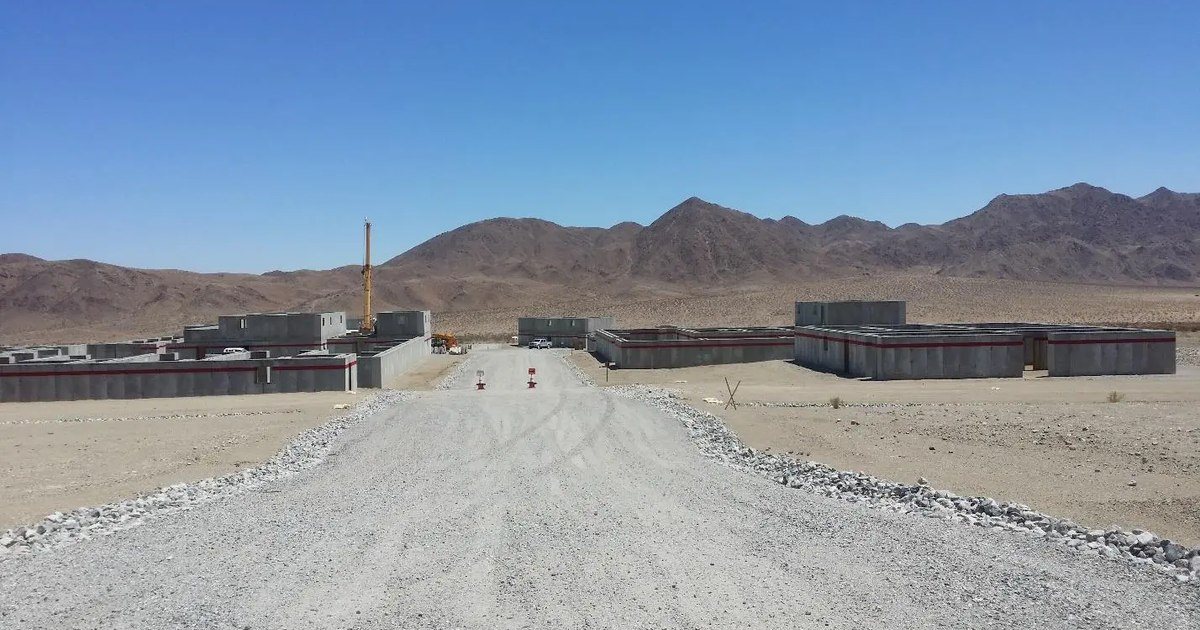
The Federal Acquisition Regulation describes performance-based acquisition in Subpart 37.6. It directs agencies, to the maximum extent practicable, to describe work in terms of the required results rather than how the work is to be accomplished or the number of hours to be provided, and to enable assessment of performance against measurable standards. Subpart 37.6 is written for service acquisitions, and many shoot house requirements combine supplies, installation, training support and maintenance services. The results-first discipline is useful across the whole requirement. The aim is a document that states what the facility has to do, how anyone will know it does it, and what the government will check.
Start With the Training Requirement
Before any wall type or layout appears, the performance work statement should describe the training the facility supports. Who trains there: military units, law enforcement teams or both. What they do: close quarters battle, room clearing, breaching, low-light operations, force-on-force with marking rounds or live fire. How often: the expected training days per year and the size of the teams that move through the structure at once. Which weapons and ammunition will be fired inside it, stated by cartridge and projectile type. Those facts drive every downstream decision, and offerors cannot propose a sound solution without them. A requirement that skips this step tends to buy a building rather than a training facility.
State the Threat as a Test Condition, Not a Product
Ballistic performance is the central requirement in a live-fire structure and the easiest one to write loosely. Phrases such as “bullet resistant” or “ballistic grade” do not tell an offeror what to design for or tell an evaluator what to check. A measurable requirement names the threat by cartridge and projectile, the shot pattern and distance, the test standard or test method, and what counts as a pass, such as no perforation and an acceptable condition of the protected face. Naming a published standard, such as UL 752 or NIJ-STD-0108.01, gives everyone a shared test method. The statement should also ask for the test documentation behind any offered assembly: who performed the test, when, on what thickness and configuration, and against which rounds. Performance belongs to a tested assembly, so joints, connections and openings belong in the requirement as well.
Describe the Geometry and How Much It Can Change
Layout is where performance and prescription meet. The statement should give the training geometry the program needs: number of rooms, room size ranges, corridor widths, door and window openings, stairs or a second story, and any observation catwalk. Where the program expects to reconfigure rooms over time, it should say so and describe how often and by whom. Where the installation’s range safety review will constrain the layout, the statement should reference that review and require the offeror’s layout to be submitted for it. Stating ranges instead of exact dimensions leaves room for offerors to propose layouts that fit their systems while still meeting the training need.
Cover the Systems, the Air and the Site
A shoot house is a structure and a set of systems. The statement should give outcomes for lighting, including low-light and blackout scenarios, targetry, observation and video, communications, doors and hardware, and ventilation where the facility has a roof. On covered and indoor facilities, airborne lead is an occupational health issue for range staff. The OSHA lead standard for general industry, 29 CFR 1910.1025, sets a permissible exposure limit of 50 micrograms per cubic meter of air averaged over an eight-hour period, so the requirement should ask how the design supports ventilation, cleaning and housekeeping alongside the installation’s own exposure monitoring. The site belongs in the requirement too: who prepares the pad or foundation, what geotechnical information the government will furnish, how utilities reach the structure, and what access delivery and erection equipment will need.
Write Standards the Government Can Actually Check
Each requirement needs a performance standard and a way to verify it. FAR Subpart 37.6 calls for measurable performance standards and a method of assessing contractor performance against them, and FAR 46.401 provides that quality assurance surveillance plans should be prepared together with the statement of work. For a shoot house, verification points usually include submittal review of the tested assembly and its documentation, inspection during installation, a functional test of each system, and a turnover inspection against the specification. Write each standard so that two different inspectors would reach the same conclusion. “Lighting adequate for training” fails that test. “Every room can be set to full darkness and to each scenario lighting condition from the control station” passes it.
Plan for the Life of the Facility
A live-fire structure is fired into for years, so the statement should look past acceptance. Require operation and maintenance information for each system, repair materials and procedures for the wall system, warranty terms with clear start dates, and training for the range staff who will inspect and maintain the structure. If the program expects contractor support for maintenance or repair after turnover, describe the outcome and the response expected rather than a fixed number of visits. The Amidon Briefing guides on inspecting a shoot house before acceptance and on questions to ask before selecting a vendor pick up where the performance work statement leaves off.
A performance work statement does its job when an offeror can read it and know what to propose, an evaluator can read the offers and know which ones meet the need, and an inspector can read it at turnover and know what to check. Programs that write the requirement around training outcomes and verifiable standards give themselves all three.
Related Reading