
Amidon Briefing · Site Delivery
November 19, 2026
Receiving and Setting Precast Training Structures: Site Readiness, Crane Lifts and What to Require in Writing
Precast and modular training structures are built off site and set by crane, so the day they arrive is a construction operation in its own right. Whether it goes smoothly is decided weeks earlier, by the condition of the ground, the route in, the lines overhead and the paperwork on file. This briefing walks range and training managers, engineers, specifiers and contracting officers through what a site should be ready for and what to require in writing before the trucks arrive.
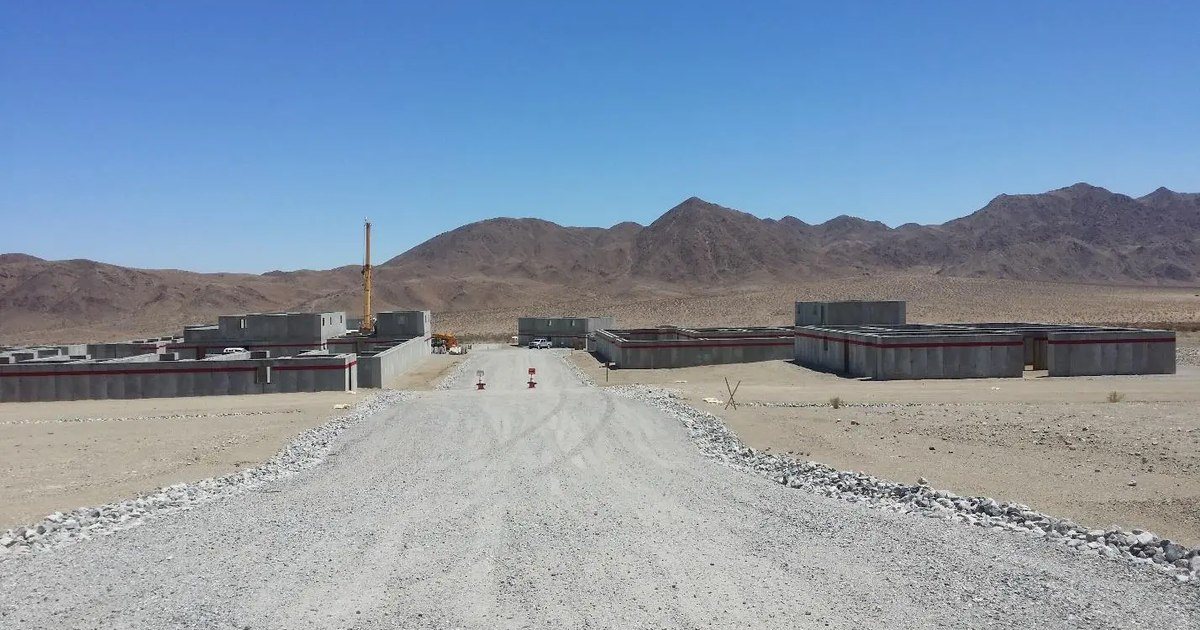
Problems on setting day are rarely about the structure itself. They come from a crane that cannot reach its pad, a laydown area that turned to mud, an overhead line nobody plotted, or a lift plan that was never submitted for acceptance. Each of these is cheaper to solve on paper than on site with loaded trucks waiting. The aim is a site that has been prepared, documented and accepted for the lift before delivery is scheduled.
Name the Governing Rules and Who Controls the Site
Crane work in construction falls under 29 CFR 1926 Subpart CC, Cranes and Derricks in Construction, and precast erection under 29 CFR 1926.704, Requirements for precast concrete. On U.S. Army Corps of Engineers work, the contract will also invoke EM 385-1-1, the Safety and Health Requirements Manual. Its current edition took effect on 15 March 2024, superseding the 2014 edition, and it includes chapters on rigging (Chapter 15) and load handling equipment (Chapter 16). Programs should confirm which edition the contract cites rather than assume it. The contract should also make clear who the controlling entity is, because Subpart CC assigns that party specific duties for the ground the crane will stand on.
Prepare the Ground Before the Crane Arrives
Under 29 CFR 1926.1402(b), equipment must not be assembled or used unless ground conditions are firm, drained and graded to a sufficient extent that, with supporting materials if necessary, the equipment manufacturer’s specifications for adequate support and degree of level are met. The regulation defines ground conditions as the ability of the ground to support the equipment, including slope, compaction and firmness, and supporting materials as blocking, mats, cribbing and similar devices. Under 1926.1402(c), the controlling entity must ensure those ground preparations are provided and must inform the equipment user and operator of hazards beneath the set-up area, such as voids, tanks and utilities, if they are identified in documents in its possession, such as site drawings, as-built drawings and soil analyses, or otherwise known to it. On a range, that means utility records and any known subsurface features should be gathered and handed over before the crane pad is laid out. If the assembly/disassembly director or the operator determines the ground does not meet paragraph (b), 1926.1402(e) requires that person’s employer to discuss the needed preparations with the controlling entity.
Plan Delivery Access and Staging
Precast units arrive on long, heavy loads, and the route from the installation gate to the setting area needs to be walked with that in mind: gate and road restrictions, turning radii, soft shoulders, culverts and any range roads closed during live fire. The site plan should show where trucks stage, where the crane sets up, where units are laid down if they are not lifted straight from the trailer, and where the lift path runs. Subpart CC requires, in 29 CFR 1926.1425(a), that where available, hoisting routes that minimize the exposure of employees to hoisted loads be used, to the extent consistent with public safety. Placing the crane pad, laydown area and work crews so the lift path avoids occupied areas is easier in the drawing than on the day.
Plot Every Overhead Power Line
Training sites often sit near distribution lines that feed range lighting, targetry and support buildings. Under 29 CFR 1926.1408, Power line safety (up to 350 kV), the employer must identify the work zone, either by demarcating boundaries or by defining it as the area 360 degrees around the equipment up to its maximum working radius, and determine whether any part of the equipment, load line or load, including rigging, could get closer than 20 feet to a power line. If it could, the regulation provides options: confirm with the utility that the line is deenergized and visibly grounded, keep everything more than 20 feet away using the measures in paragraph (b) of the section, or determine the line voltage and keep to the minimum clearance in its Table A. A site survey that shows every line, its owner and its voltage lets that decision be made before the crane is ordered.
Account for Lifting Inserts, Hardware and Temporary Bracing
29 CFR 1926.704 sets specific lifting requirements for precast members. Lifting inserts embedded in or attached to tilt-up members must be capable of supporting at least two times the maximum intended load applied or transmitted to them; inserts in other precast members, at least four times; and lifting hardware, at least five times the maximum intended load. The section also requires precast wall units, structural framing and tilt-up panels to be adequately supported to prevent overturning and collapse until permanent connections are completed, and prohibits employees under precast members being lifted or tilted into position except those required for their erection. The submittals should therefore identify the lifting inserts and hardware for each unit, the unit weights, and the temporary support and connection sequence the erection crew will follow.
Confirm the Crew Behind the Lift
Under 29 CFR 1926.1427(a), the employer must ensure each operator is trained, certified or licensed, and evaluated before operating equipment covered by Subpart CC; the section recognizes certification through an accredited testing organization, an audited employer program, a current U.S. military qualification for operators employed by the issuing military entity, and qualifying government licenses. Where employees hook, unhook or guide a load within the fall zone, 1926.1425(c)(3) requires the materials to be rigged by a qualified rigger. Under 1926.1419(a), a signal person is required when the point of operation is not in full view of the operator, when the operator’s view is obstructed in the direction of travel, or when the operator or the person handling the load determines one is needed because of site-specific safety concerns. OSHA notes that the signal person’s qualification documentation must be available at the worksite and specify each type of signaling the person is qualified for.
Require It in Writing Before the Trucks Arrive
The contract and submittal register should make the setting plan a document, not an assumption. A 2024 Corps of Engineers New England District solicitation, for example, listed a Critical Lift Plan on ENG Form 6213 among its pre-work submittals, required a site-specific Accident Prevention Plan and an Activity Hazard Analysis accepted for each definable feature of work, and required a lift plan to be submitted and accepted before any lifting operations. A complete package for a precast delivery should include the governing documents and their editions, the name of the controlling entity, the ground preparation and crane pad design, the underground hazard information handed to the crane user, the delivery route and staging plan, the power line survey and the option chosen under 1926.1408, unit weights and the lifting insert and hardware data, the temporary bracing and connection sequence, the lift plan, and the operator, rigger and signal person qualifications. Contracting officers who make acceptance of that package a condition of scheduling delivery keep the trucks, the crane and the crew from arriving ahead of the paperwork.
Precast and modular structures move much of the construction risk off site, but the lift remains. Programs that settle the ground, the route, the lines overhead and the written submittals before delivery give the erection crew, the safety reviewers and the contracting officer the same plan to work from.
Related Reading