
Amidon Briefing · Maintenance
October 12, 2026
Protecting Shoot House Floors at Breach Points
Breach points take a kind of punishment the rest of a shoot house floor never sees. Patching that concrete over and over keeps the room open, but it rarely fixes the problem. Here is how to recognize the patch cycle, and how to choose between door-side pads, a fully protected breaching room and protection across the whole structure.
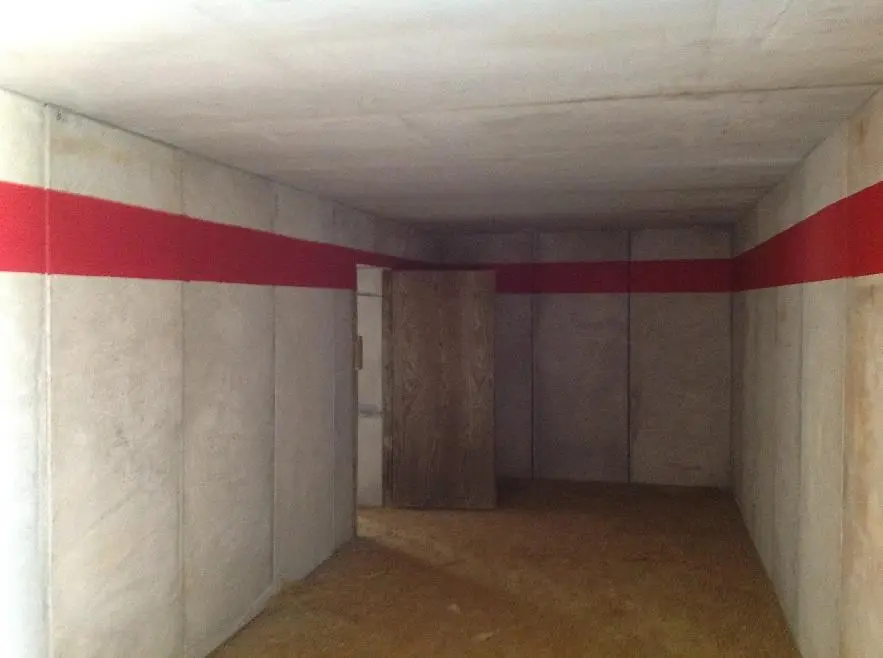
In most live-fire shoot houses the walls get the attention. The floor at the door gets the damage. Every mechanical, ballistic or explosive breach puts tools, rounds, fragments and debris into the same small area of slab, repetition after repetition. When a floor is patched more often than it is inspected, the patch has become the maintenance plan. That is worth changing before repairs start to cost more range time than they save.
Why Breach Points Wear Differently
A shoot house wall absorbs rounds spread across target areas that range staff can rotate. A breach point cannot be rotated. Shotgun breaching rounds fired at hinges and locking points travel down and into the floor beside the door. Rams and pry tools are set down, dropped and dragged across the threshold. Explosive charges leave fragments and door debris on the same pad of slab every time. The result is repeated damage in a small, predictable footprint: the floor on the hinge side of the door, the threshold itself, and the first few feet inside the room.
How the Patch Cycle Starts
Concrete patching works well on a single defect. It works poorly on a surface that is struck in the same place every training day. Thin patches feather out at their edges, and those edges are where the next impact lifts them. Each repair needs surface preparation and curing time, which takes the room out of the schedule. Each failed patch is chipped back to sound material, so the repaired area grows a little with every cycle. After a season of this, a facility can end up with a door pad that is mostly patch, a room that goes offline every few weeks, and no clear picture of the slab underneath. Repair is still the right answer for isolated damage, and our ballistic repair material and process exist for exactly that. The question is whether the damage is isolated.
Option One: Door-Side Pads
Where breach training happens at a small number of doors, the lightest fix is a protective pad at each one. Ballistic rubber matting laid over the slab on the hinge side of the door and across the threshold gives breaching rounds, fragments and tools a replaceable wear surface in place of the concrete. Pads suit facilities where breaching is one task among many, the breach doors do not move, and the rest of the floor shows normal wear. Size each pad from the damage the floor already shows: the existing patch footprint plus a margin on every side is a reliable starting point.
Option Two: A Full Breaching Room
When a unit runs breach repetitions as a primary task, damage rarely stays at the threshold. Rounds, fragments and debris carry into the room, and entry teams cross the whole floor at speed with tools in hand. Covering the entire floor of a dedicated breaching room removes the boundary between protected and unprotected slab, which is where pad edges otherwise take their own damage. It also gives range staff one room where breach training is expected to happen, so the rest of the structure is not slowly turned into a breach facility by default.
Option Three: The Whole Shoot House
Whole-structure floor protection makes sense when breaching happens at most doors, when the layout is reconfigured often enough that breach points move, or when the facility is being built or rebuilt anyway. It is the largest material commitment and the simplest to manage: one floor system, one inspection routine and one stock of spare sections. For new construction, the decision belongs in the design conversation alongside wall layout and door placement, which is how we approach every Amidon Shoot House.
Edge Strips and Anchoring
Most problems with protective matting start at its edges. A raised edge is a trip hazard for an entry team moving fast under load, and a lifted edge is where debris, water and lead dust collect. Beveled edge strips or transition ramps at every exposed edge, especially across thresholds, keep the change in floor height gradual. Anchoring should keep sections from creeping under repeated impact without putting exposed steel in the line of fire: fasteners belong below the wear surface or at the perimeter, outside the impact zone. Interlocking sections that can be lifted one at a time make it practical to inspect the slab and swap a single worn piece. Confirm with the matting manufacturer how its product is meant to be anchored to concrete, and ask for the test documentation behind any ballistic or fragment claim it makes.
Inspection and Replacement
Treat protective matting as a consumable with a schedule, not as a permanent floor. After each block of breach training, check door-side pads and thresholds for embedded fragments, tears, gouges, compressed areas and lifted edges. At a set interval, lift the sections in the highest-use zones and look at the slab underneath. Record findings by door and room, so wear patterns show which breach points carry the most load. Keep spare sections on hand so a worn piece can be replaced the same day instead of closing the room. And if the slab under a pad shows damage, repair it before the pad goes back down: covering a defect does not remove it.
A floor that needs a patch after every training week is giving range staff useful information. Door-side pads, a full breaching room and whole-structure protection are three answers to the same question: where does the damage actually happen, and how much range time is the current repair cycle costing?
Related Reading