
Amidon Briefing · Construction Methods
August 15, 2025
Why Modular Ballistic Concrete Beats Fixed Construction
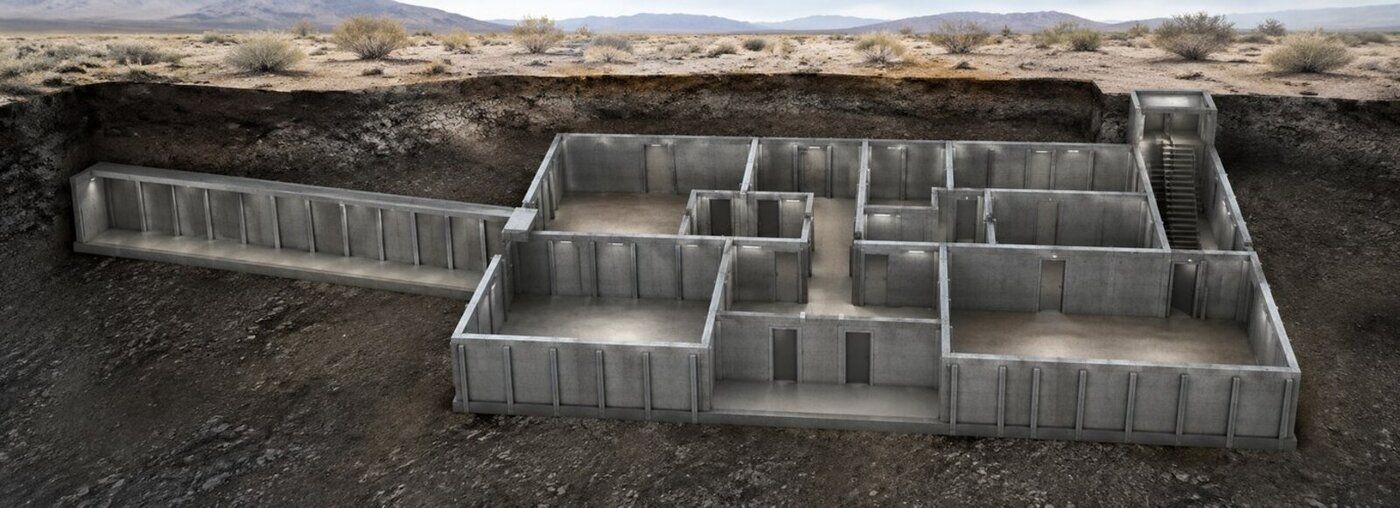
Cast-in-place concrete construction has a real advantage: simplicity. It also has a real limitation: once it’s built, the layout is fixed. Amidon Ballistic Concrete (ABC) takes a different approach — precast, modular construction that installs faster and stays reconfigurable long after the facility is built.
Installation Speed
Precast ABC panels go up with a crane on site, rather than requiring forms to be built, concrete poured, and cure time before the next phase can start. That difference shows up directly in project timelines.
Multi-Story, Not Just Multi-Room
Because the panel system is engineered for it, ABC structures can go beyond a single-story footprint — second-story installations use the same modular components as ground-level construction, rather than requiring an entirely different building method once you add a floor.
Reconfigurable After the Fact
A fixed structure locks in one layout for its operational life. A modular one doesn’t — walls, doorways, and room configurations can be changed as training requirements evolve, without demolishing and rebuilding from scratch. For a facility that’s meant to serve multiple mission profiles over years of use, that flexibility is the difference between one training asset and several.
Related Reading