
Amidon Briefing · Maintenance & Repair
November 26, 2026
Lead Exposure Rules for Shoot House Repair Crews: What OSHA 1926.62 Requires and What to Put in the Contract
Every live-fire structure collects lead. Bullet fragments and dust settle in the walls, floors, baffles and target areas, and the day a crew arrives to patch, cut, grind or demolish, that lead becomes an occupational exposure question. Federal rules treat that work as construction, with its own standard and its own paperwork. This briefing walks range and training managers, engineers, specifiers and contracting officers through what 29 CFR 1926.62 requires and what a repair contract should ask for before the crew starts.
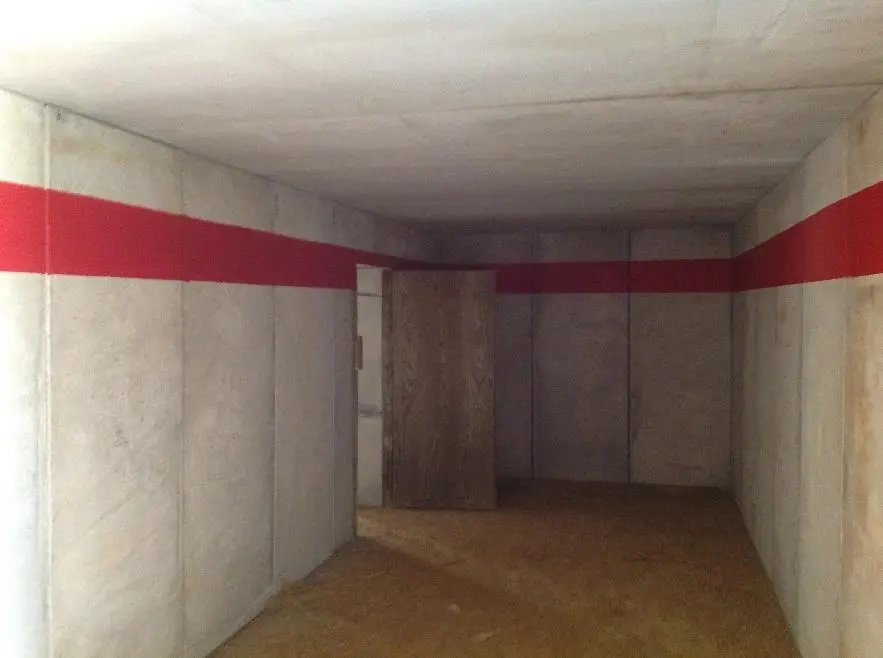
Range operations and range repairs are governed differently. Day-to-day cleaning and operation of a range fall under the OSHA lead standard for general industry, while repair, renovation and demolition fall under the construction standard. The difference matters because the construction standard presumes high exposures for certain tasks until they are measured, and it requires specific protections from the first day. The aim is a repair job whose exposure assessment, written program and crew protections are settled and accepted before anyone disturbs a contaminated surface.
Know Which Standard Governs the Work
The general industry lead standard, 29 CFR 1910.1025, states in paragraph (a)(2) that it does not apply to the construction industry. Construction work is covered instead by 29 CFR 1926.62, which applies to all construction work where an employee may be occupationally exposed to lead. Its scope, in paragraph (a), lists demolition or salvage of structures where lead or materials containing lead are present, removal or encapsulation of materials containing lead, new construction, alteration, repair or renovation of structures containing lead, installation of products containing lead, lead contamination and emergency cleanup, transportation, disposal, storage or containment of lead on the site, and maintenance operations associated with those activities. Patching a shoot house wall, replacing panels, cutting out damaged sections or demolishing a structure that has seen live fire fits that list. The contract should say so plainly, so that the contractor plans to the construction standard rather than to the range’s operating procedures.
Start With the Exposure Assessment
The standard sets two airborne thresholds, both measured as an 8-hour time-weighted average. The action level is 30 micrograms of lead per cubic meter of air, and the permissible exposure limit in paragraph (c)(1) is 50 micrograms per cubic meter. Under paragraph (d)(1)(i), each employer covered by the standard must initially determine whether any employee may be exposed at or above the action level. Exposure is measured as if no respirator were worn, and the monitoring uses full-shift personal samples representative of each job classification in each work area. A repair contractor should therefore expect to sample the crew during the first representative work, not assume the result from a previous site.
Protect the Crew Before the Results Are In
Paragraph (d)(2) lists tasks for which the employer must treat employees as exposed above the limit until an assessment shows otherwise. Where lead coatings or paint are present, manual demolition, manual scraping, manual sanding, heat gun use and power tool cleaning with dust collection are presumed above the permissible exposure limit. Lead burning, use of lead-containing mortar and several abrasive and power tool tasks are presumed above 500 micrograms per cubic meter, and abrasive blasting, welding, cutting and torch burning on structures with lead coatings or paint are presumed above 2,500. Paragraph (d)(2)(ii) extends interim protection to other tasks where there is reason to believe exposure may exceed the limit. During that interim period, paragraph (d)(2)(v) requires respiratory protection, protective clothing and equipment, change areas, hand washing facilities, blood lead and zinc protoporphyrin testing, and training. Cutting, grinding or chipping surfaces that have collected bullet fragments and lead dust is exactly where that question should be asked before the first cut.
Require the Written Compliance Program
Where exposure may exceed the permissible exposure limit, paragraph (e)(2)(i) requires the employer to establish and implement a written compliance program before the job begins. Its contents, set out in paragraph (e)(2)(ii), include a description of each activity in which lead is emitted, the specific means that will be used to achieve compliance, air monitoring data, a detailed schedule for implementation, a work practice program, and arrangements among contractors on multi-contractor sites. Paragraph (e)(2)(iii) requires the program to provide for frequent and regular inspections of job sites, materials and equipment by a competent person. The program must be made available on request and revised and updated at least annually. On a range where the installation, a prime contractor and a specialty subcontractor are all present, the multi-contractor arrangements are the part most worth reading closely.
Plan Hygiene Facilities and Work Area Rules
Paragraph (i) sets hygiene requirements that need space and utilities on site, which is why they belong in the planning rather than the field. Where employees are exposed above the limit, food, beverages, tobacco products and cosmetics are not allowed in the work area. The employer must provide clean change areas with separate storage for protective work clothing and street clothes to prevent cross-contamination, and employees may not leave the workplace wearing protective clothing or equipment required by the standard. Showers are required where feasible, eating areas must be kept as free as practicable from lead contamination, and employees must wash their hands and face before eating, drinking or smoking. Under paragraph (m), each work area above the limit must be posted with signs reading in part DANGER, LEAD WORK AREA, and DO NOT EAT, DRINK OR SMOKE IN THIS AREA.
Confirm Medical Surveillance, Removal and Training
Under paragraph (j)(1)(i), initial medical surveillance, consisting of blood lead and zinc protoporphyrin testing, must be made available to employees exposed at or above the action level on any day. A full medical surveillance program applies under (j)(1)(ii) to employees exposed at or above the action level for more than 30 days in any consecutive 12 months. Paragraph (k) requires an employee to be removed from work with exposure at or above the action level when a periodic and a follow-up blood test both show a blood lead level at or above 50 micrograms per deciliter, with return once two consecutive tests are below 40. Paragraph (l) requires training for each employee exposed at or above the action level on any day, before the job assignment and at least annually after that. A repair crew that rotates between ranges may already be in a surveillance program, and the contractor should be able to show it.
Write It Into the Repair Contract
The repair statement of work should make the lead plan a submittal rather than an assumption. A complete package names 29 CFR 1926.62 as the governing standard, identifies each task that will disturb contaminated surfaces, gives the initial exposure assessment plan and the interim protections the crew will use until results are in, includes the written compliance program and the name of the competent person, shows where change areas, washing facilities and eating areas will be located, and provides the crew’s training and medical surveillance records. It should also state how contaminated debris and waste will be handled on site and coordinated with the installation’s environmental office, and how the work area will be posted and separated from any training still running nearby. Contracting officers who make acceptance of that package a condition of mobilization keep the crew, the range schedule and the paperwork in the same order.
Live-fire structures are built to be repaired, and good maintenance keeps them in service. The lead that training leaves behind does not change that, but it does change how the work is planned. Programs that settle the standard, the assessment, the written program and the crew protections before mobilization give the contractor, the safety office and the contracting officer the same plan to work from.
Related Reading